Article
DESENHO E RECEPÇÃO DE UM CURSO ONLINE DE LEGENDAGEM PARA ESTUDANTES UNIVERSITÁRIOS DE LÍNGUA ITALIANA
- Olivia Correa Larios¹ Perfil ORCID de Olivia Correa Larios
- Diana Margarita Córdova Esparza² Perfil ORCID de Diana Margarita Córdova Esparza
- Roberto Gerardo Flores Olague³ Perfil ORCID de Roberto Gerardo Flores Olague
- UAZ ¹ Universidad Autónoma de Zacatecas, , Zacatecas, Mexico, ocorrealarios@gmail.com
- UAQ ² Universidad Autónoma de Querétaro, , Querétaro, Mexico, diana.cordova@uaq.mx
- UAZ ³ Universidad Autónoma de Zacatecas, , Zacatecas, Mexico, roberto.flores@uaz.edu.mx
Resumo
A legendagem didática designa a utilização de diversos recursos tecnológicos específicos para a criação de legendas como ferramentas de ensino. Este artigo descreve o processo de concepção, implementação e avaliação por julgamento de especialistas e por participantes de uma e uma proposta metodológica que utiliza quatro tipos de tarefas de legendagem (transcrições, condensações, legendas reversas e legendas padrão). O contexto da proposta é um curso virtual destinado a estudantes universitários de língua italiana, implementado na Licenciatura em Línguas Estrangeiras da Universidade Autônoma de Zacatecas, México. O desenho do curso seguiu o modelo instrucional ADDIE e para sua avaliação é exposto um estudo pré-experimental com análise de dados qualitativos e quantitativos e com escopo descritivo. Foram utilizadas duas amostras de participantes: 8 alunos de línguas estrangeiras e 5 especialistas cujas áreas de especialização são o ensino de línguas, a tradução e as tecnologias de informação e comunicação. Os resultados confirmam que a legendagem didática, no ambiente virtual e com as ferramentas digitais selecionadas, é bem recebida por especialistas e por alunos e que a legendagem é uma atividade motivadora.
Palavras-chave: tradução audiovisual; legendagem didática; ensino de línguas; desenho instrucional.
Abstract
Didactic subtitling designates the use of several technological resources specific to the creation of subtitles as teaching tools. This article describes the process of design, implementation and evaluation by expert judgment and by participants of a methodological proposal involving four types of subtitling tasks (transcriptions, condensations, reverse and standard subtitles). The context of the proposal is a virtual course aimed at university students of Italian language, implemented in the Foreign Languages Degree at the Autonomous University of Zacatecas, Mexico. The course design followed the ADDIE instructional model and for its evaluation a pre-experimental study with qualitative and quantitative data analysis and descriptive scope is exposed. Two samples of participants were used: 8 students of foreign languages and 5 experts whose areas of expertise are language teaching, translation and information and communication technologies. The results confirm that didactic subtitling, within the virtual environment and with the selected tools, is positively received by both experts and students and that subtitling is an activity they find motivating.
Keywords: audiovisual translation; didactic subtitling; language teaching; instructional design.
INTRODUCTION
According to Cook (2010), from the perspective of direct and communicative methods, translation has been seen as a boring and demotivating activity since, due to the apparent centralization of attention on grammatical correctness, other aspects of translation are neglected. However, the global production of multimodal texts, their circulation and immediate availability together with the rapid technological development in the last decades, has led to a reintroduction of translation, specifically of audiovisual translation (hereinafter AVT) as a didactic tool in the foreign languages classroom. AVT makes use of either text, as in subtitling, or of soundtrack, as in dubbing. In either forms, it can be done in different language combination and directions:
-
Intralingual AVT: The translation involves only one language. The translated text is a transcription, a paraphrase or a condensation of the original text.
-
Interlingual AVT: The translation involves two languages: the original text and the translated text are in different languages. When translation is from a foreign language into the mother tongue it is called direct or standard translation. When translation is from the mother tongue into the foreign language, it is called reverse translation.
Ragni (2018) states that creating subtitles as a didactic activity for the learning of foreign languages enables the acquisition of new vocabulary and it facilitates the development of oral and written comprehension and production, as well as of transferable skills such as the digital literacy. Each linguistic combination in the creation of subtitles has specific learning outcomes:
-
Intralingual subtitling enhances oral comprehension, vocabulary acquisition, as well as the ability to summarize and paraphrase information.
-
Reverse interlingual subtitling enhances writing skills, vocabulary acquisition and grammatical knowledge.
-
Standard interlingual subtitling enhances oral comprehension and vocabulary acquisition.
Recent empirical studies carried out in university contexts around the world have demonstrated that the fact that subtitling involves interacting with multimodal texts makes students work on their language skills, while also learning non-verbal and cultural aspects. Specifically, studies on intralingual subtitling have found that subtitling is a well-received didactic activity among university students, that its positive effects have been verified through oral comprehension tests (Beltramello, 2019; Talaván, 2011; Campbell & Fuentes-Luque, 2020) and vocabulary tests (Ávila-Cabrera & Rodríguez Arancón, 2021; Soler Pardo, 2020).
On the other hand, Talaván, Ibáñez & Bárcena (2016), Ávila-Cabrera (2019) and Ávila-Cabrera & Rodríguez Arancón (2021) have found that when working on reverse interlingual subtitling, students improve their written production and their ability to recall new vocabulary, which they have demonstrated through the implementation of writing tests before and after subtitling activities. Además, los investigadores concuerdan en que los participantes expresan agrado por la traducción en dirección inversa y que los estudiantes perciben una mejora en todas las habilidades lingüísticas.
Finally, research shows that standard interlingual subtitling is helpful in promoting intercultural awareness and contrastive pragmatics (Incalcaterra McLoughlin & Lertola, 2015; Lopriore & Ceruti, 2015; McKenzie, 2018). This last group of studies focus on the students’ reception of subtitling and its impact on their cultural knowledge rather than on students’ performance on language tests. However, as Herrero, Sánchez Requena and Escobar (2017) point out, standard subtitling has proven to have the least impact on language skills when compared to other types of subtitling.
This article began presenting the empirical foundation in the specialized literature that demonstrate that audiovisual translation didactic activities have an important role in the teaching of foreign languages at the university level. Next, we present the instructional design for a virtual course of didactic subtitling in Italian for university students. Finally, the evaluation of the course is exposed using a qualitative content analysis methodology to assess the free comments expressed by experts and by the participating students.
METHOD
Following the ADDIE instructional design model, an online course of didactic subtitling was created. The context of implementation is the Italian language courses offered at the Bachelor Degree in Foreign Languages of the Autonomous University of Zacatecas, Mexico. The evaluation of such course was carried out both qualitatively and quantitatively. The qualitative analysis consists on the collection and coding of free comments by experts and by the participating students. The analysis of these comments was done following the systematic coding procedure within the technique of qualitative content analysis (Mayring, 2014). Also, a CILS (Certificate of Italian as a Foreign Language) sample test was used as a pre-test and post-test. The quantitative data resulting from the test scores is presented in order to measure general learning gains from the intervention.
Participants
This study has two non-probabilistic and intentional samples of participants: a panel of experts and a group of students. There are five participating experts who work in the field of teaching (two in foreign languages, one in translation, one in technologies applied to education and one in both languages and teacher training). They all have ad hoc training in the subjects they teach (two have a bachelor's degree, one has a master's degree, and two have a doctorate), in addition, three of them work in bachelor's and master's degree programs (four in Mexican institutions and one in Spanish institutions), while two of them work in non-university centers (one of them in Argentine institutions). The student population that the course is aimed at are fourth-year students of the aforementioned degree. As Talaván (2019) states, it is necessary for students to have passed the initial levels in order to work with a variety of linguistic complexities involved in intensive listening and writing of subtitles in a foreign language. The sample of students is made up of eight individuals who voluntarily participated in the course, 6 women (75%) and 2 men (25%), whose average age is 26 years.
Procedure
Below (Table 1) are the stages and activities that make up the construction of the course according to the ADDIE model.
Table 1: Stages and activities in the ADDIE model.
| Stage | Activities | Description |
|---|---|---|
| Analysis | ||
| Identifying audiovisual translation needs in the curriculum | The contents of the subjects that make up the curriculum of the program do not include the practice of audiovisual translation in any of its modalities. | |
| Identifying population needs | Twelve fourth-year students answered a diagnostic questionnaire in November 2021. The participants have a habitual and daily consumption of audiovisual translation, in which subtitling prevails over dubbing. Two of the students have done some subtitling exercise, and neither is familiar with subtitling software and platforms. | |
| Design | ||
| Defining the learning goal | Improve oral and written comprehension and grammatical command of the Italian language at level B2 through activities of observation and creation of intralingual and standard and reverse interlingual subtitles. | |
| Instructional plan | The use of passive (observation of already subtitled audiovisual material) and active (creation of subtitles) subtitling is proposed within didactic sequences that consider four types of subtitles: 1) intralingual as transcription of the original, 2) intralingual as condensation of the original, 3 ) reverse interlingual English-Italian and 4) standard interlingual Italian-Spanish. | |
| Selecting resources | H5p tool for didactic sequences. Aegisub free software for subtitling tasks. Chamilo platform to host the course. Selection of eight contemporary film trailers on YouTube. | |
| Development | ||
| Creating didactic materials | Creation of didactic activities for familiarization with the cultural theme, the vocabulary and the grammatical theme present in each trailer, as well as oral comprehension of it. Definition of four subtitling tasks. | |
| Course assembly in the learning environment | Sequential organization of didactic activities and subtitling tasks in the Chamilo virtual environment. | |
| Implementation | Online course with voluntary participation | Eight students completed the course held from January 9 to March 3, 2023. |
| Evaluation | Data collection and analysis | The free comments on the assessment of the course by the panel of experts are qualitatively analyzed. The free comments on the reception of the course by students are qualitatively analyzed. The pre-test and post-test scores are compared. |
Source: Own elaboration
Based on Torralba-Miralles (2020), it was decided that the course would consist of four passive subtitling activities, that is, didactic sequences that include viewing already subtitled audiovisual material, and four active subtitling activities, that is, didactic sequences that include the task of creating subtitles. The passive activities will fulfill the purpose of introducing the student to the different types of subtitles: 1) intralingual as transcription of the original, 2) intralingual as condensation of the original, 3) English-Italian reverse interlingual and 4) Italian-Spanish standard interlingual. During the active phase, the student will exercise the creation of subtitles of each type. Table 2 shows the selection of audiovisual materials, the type of activity to carry out with each one, the cultural theme that it presents and the grammatical theme to work on.
Table 2: Trailers and subject
| Title and year of release | Type of activity | Cultural subject | Grammatical subject |
|---|---|---|---|
| La vita davanti a sé, 2020 | Passive intralingual subtitles | Southern Italy | The ci particle |
| La Befana vien di notte, 2018 | Active intralingual subtitling (transcription) | The Befana | 2° and 3° hypothetical periods |
| La partita, 2018 | Passive intralingual subtitles | Italian soccer | Indefinite adjectives and pronouns |
| L’ombra del giorno, 2022 | Active intralingual subtitling (condensation) | The racial laws of 1938 | Past conditional tense |
| Little Italy, 2018 | Passive reverse interlingual subtitles | Italian stereotypes | The particle cui as a relative pronoun and as a possessive pronoun |
| Italy unpacked, 2013 | Active reverse interlingual subtitling | Italian heritage in UNESCO lists | Passive voice |
| Mio fratello rincorre i dinosauri, 2019 | Passive standard interlingual subtitles | The Italian family | Subjunctives |
| Il giovane favoloso, 2014 | Active standard interlingual subtitling | Italian poets | Subjunctives |
Source: Own elaboration
Once the audiovisual materials were selected, the didactic sequences were created. Table 3 exposes the activities that make up each stage of a didactic sequence. In this exposition it is possible to appreciate that the objectives of each activity are aligned with the learning goal that guides the design of the course.
Table 3: Description of the didactic sequences
| Stage | Activity and duration | Description | Objetive |
|---|---|---|---|
| Before watching | Introduction 3 minutes | Information on the cultural topic addressed in the audiovisual material is presented | To provide contextual information to anticipate the content of the video |
| Before watching | Vocabulary 10 minutes | New vocabulary present in the dialogues is introduced | To get familiar with the vocabulary present in the video |
| Watching | First watch of audiovisual material 2 minutes | A trailer of a maximum duration of 2 minutes is watched. In passive subtitling lessons the trailer is presented subtitled. | To practice oral comprehension (and written comprehension in the case of subtitled materials) to become familiar with the general ideas presented in the video |
| Watching | Second watch of audiovisual material 5-7 minutes | The watching of the same trailer is now interrupted by listening comprehension questions | To understand the linguistic content of the video |
| Watching | Script analysis 5-7 minutes | A selection of phrases present in the trailer that could pose some difficulty for the student is presented | To facilitate the detailed understanding of the content relating the work done in the pre-watching and watching stages |
| Subtitling | Subtitling task 60 minutes | The student creates the subtitles for the watched trailer using the Aegisub software and following the given directions. | To put audiovisual translation into practice in order to exercise linguistic, mediation and digital skills |
| After watching After subtitling | Grammar review 5 minutes | A grammatical topic is introduced accompanied by examples present in the audiovisual material | To deepen the formal and grammatical study of the language from the content of the audiovisual material |
| After watching After subtitling | Grammar practice 10 minutes | The student exercises the given grammatical structure | To strengthen the grammatical command of the language as a complement to the exposure to audiovisual content |
Source: Own elaboration
Figure 1 shows some of the interactive activities corresponding to the trailer La Befana vien di notte. While Figure 2 shows the beginning of the process of intralingual subtitling of the same trailer.
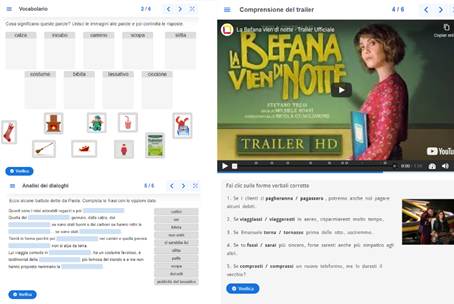
Figure 1: Examples of designed interactive activities.
Source: Own elaboration on the Lumi platform
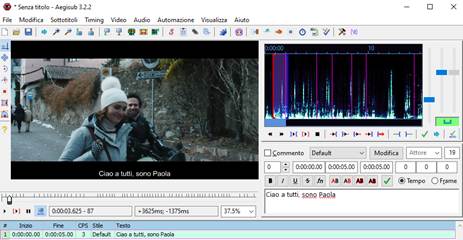
Figure 2: Example of subtitling activity.
Source: Aegisub subtitling software interface
RESULTS
The evaluation stage of the instructional design consists on the analysis of both qualitative and quantitative data. The results of the assessment of the course by experts and by participants are presented first. The data obtained from both assessments were collected virtually through an anonymous questionnaire using Google Forms as a collection tool. In it, the participants were asked to express their opinion about the course, delving into both positive and negative assessments of it. The analysis of the data obtained was carried out following the systematic coding procedure within the qualitative content analysis technique (Mayring, 2014). With this technique it is possible to describe and interpret the meaning of textual material, as is the case of free comments. The process began with the inductive coding of the material, for which the contents of each comment were reformulated into codes, resulting in a series of codes that were categorized according to the general themes addressed, finally the frequency of mentions of each code within each category was assigned.
Assessment by expert judgement
Of the total comments issued by the five experts, four categories and nine codes were identified. Table 4 shows these categories and codes, as well as the total number of mentions by the experts.
Table 4: Categories and codes of comments issued by experts
| Category | Code | Mentions |
|---|---|---|
| Positive feedback on the type of course materials | ||
| The activities are helpful | 4 | |
| The activities are interesting | 4 | |
| The activities are easy to do | 3 | |
| The materials adequately address cultural themes | 1 | |
| Positive feedback on the organization of the course | The course is well structured | 2 |
| Technical aspects of the course that need improvement | Initially it is difficult to understand how to use the software | 2 |
| Aspects that need improvement on the appearance and presentation of the course | ||
| The format of the icons must be uniform | 1 | |
| The quality of the images must be taken care of | 1 | |
| Informed consent must appear on the main page | 1 |
Source: Own elaboration
As the table shows, the largest number of codes and mentions correspond to the categories that positively assess both the materials that make up the course and its structure, which is exemplified below with some observations from the participating experts:
Everything was very well structured, organized and applied. (...) The vocabulary and grammar exercises are of great help for the comprehension of oral texts. The approach to Italian culture was very well addressed. It is interesting and it is fun to do the subtitling (Expert 1). The course materials were relevant, understandable and the activities were easy to carry out (Expert 2).
On the contrary, some of the received feedback point to improvements in technical aspects and in the appearance of the contents:
I recommend to add a video tutorial for the use of the software (Expert 1). At first, fully understanding the platform is a bit tedious (Expert 3). I suggest that the informed consent appear on the main page of the course (...). Unify the format of the icons on the main page (size, text alignment). Take care of the quality of the images (size (pixels and cm), clarity/contrast). Session 3 does not include the cell to indicate that the page is finished (Expert 4).
The recommendation to include a video tutorial for the use of Aegisub was accepted and said video was included as a link within the written tutorial that was already present in session 3 of the course. A response was also given to the recommendation on the visibility of informed consent, not placing it on the main page, but rather as the first element that is accessed when entering the first session of the course. Finally, errors related to the quality of some images, the format of icons and missing cells were corrected.
Assessment by end-users
In order to observe the reception of the course by the participants, as well as to receive their opinions about it, they were asked to answer an open question at the end of the last module. The analysis of the data obtained was carried out as with the comments of the experts, by using the technique of qualitative content analysis (Mayring, 2014) through a systematic coding procedure. The qualitative analysis began with the coding of the material to obtain a series of codes that were later grouped into categories according to the topic addressed, finally, after reviewing the comments, the frequency of mentions of each code within each category was determined. Of the total comments issued by the eight course participants, four categories and nine codes were identified. Table 5 shows these categories and codes, as well as the total number of mentions by students.
Table 5: Categories and codes of comments issued by end-users
| Category | Code | Mentions |
|---|---|---|
| Positive feedback on the type of course materials | ||
| The activities are motivating | 8 | |
| The contents are useful | 7 | |
| The course is fun | 6 | |
| The materials help create the subtitles | 2 | |
| The exercises are dynamic | 1 | |
| Aspects that need improvement on the course materials | ||
| The video is difficult to understand | 1 | |
| The exercise is too long | 1 | |
| Enhanced content learning | ||
| I learned new vocabulary | 7 | |
| I learned about Italian culture | 5 | |
| I practice grammar | 5 | |
| I learned to use useful tolos | 3 | |
| Positive feedback on the learning experience | ||
| I reinforced my Italian knowledge | 4 | |
| I liked translating | 4 | |
| I felt proud of my results | 2 | |
| I would use this method if I were a teacher | 2 | |
| The course increased muy love for the Italian language | 1 | |
| Technical aspects | ||
| The software is easy to use | 4 | |
| The software is difficult to use at first | 1 | |
| The software is not compatible with my computer | 1 | |
| Positive feedback on the course organization | The course is well structured | 3 |
| Positive feedback on the teacher’s actions | The pedagogical accompaniment was useful | 2 |
Source: Own elaboration
The two categories with the highest number of mentions are the positive assessments of the materials and the learning enhanced by the course. Some representative examples of the mentions listed in Table 5 can be found in the following observations from the participants:
-
I really liked all the activities, especially the cultural aspects that appeared in the videos and the new phrases that I learned while working with them. The vocabulary activities, the grammar reviews (which I really needed) and the practice of it were very helpful. (Participant 2).
-
The activities were quite entertaining and easy to understand. I achieved a broader vocabulary thanks to the context of the trailers. In general, it was a good experience working with this type of translations (Participant 3).
-
I loved participating in this course. Each of the activities and practices was truly enriching and very creative. I learned a lot, both linguistically and culturally speaking (Participant 5).
-
I loved the course, not only is it easy to understand, but also the information is condensed so it's easier to retain the main ideas. I also liked that each exercise was planned and structured so that not only grammar topics were seen, but also culture and vocabulary (Participant 7).
-
The vocabulary and grammar exercises were of great. The contents regarding Italian culture were really good. It was very interesting and I found it fun and engaging to make the subtitles. (Participant 8).
On the other hand, the participants expressed some positive assessments about the learning experience, of which those related to the impact of knowing their results as they progressed and those related to their perception that this type of translation activities should be present in the foreign language classrooms. These observations stand out since they are directly related to the approach of this research and its purposes:
-
Finally, I will say that as I carried out the activities I remembered my love for this language. Perhaps I did not do well when answering the exercises, but each one of them allowed me to rediscover my passion for the Italian language, and I loved that. And I would definitely like to apply this method to teaching one day, as I find it very fun (Participant 2).
-
It was very exciting to see my results throughout the development of the course as they made me feel proud of my knowledge and ability (Participant 4).
-
Without a doubt, in my opinion, if subtitling were part of all foreign language courses, the students' experience would be much more successful and rewarding (Participant 5).
-
I really enjoyed working with original Italian content […]. I discovered that not all types of subtitling are easy, so I now know better which one I would do if I continued working on translation. (Participant 6).
-
The results were positive and what I learned was very useful (Participant 8).
These rather positive comments on the course content relate mostly to affective factors of language learning, such as motivation and engagement. Previous research has proven that these affective factors are crucial in the learning process and are closely related to student sense of achievement (Fernández Costales, 2021). The literature review also indicates that didactic audiovisual translation motivates students and helps them engage in active and autonomous learning (Talaván, Lertola & Fernández Costales, 2024). The students’ reception of this methodological proposal proves to contribute to those areas of language learning.
Despite the positive reception that is demonstrated in the codes and the mentions exposed in Table 5, it is necessary to recognize that four negative observations about the course were also identified, which belong to the categories Aspects that need improvement on the course materials and Technical aspects of the course. These four mentions are reproduced below:
-
The only thing I didn't like so much was when we worked with the video in English, but that's because that's not one of my favorite languages and, besides, I don't have a good level in it, so the activities seemed more difficult (Participant 2).
-
I should mention that I had a big problem with the software: my computer is a Mac and it didn't accept the subtitling program. In the end, with the help of a professional I was able to download Aegisub on a 2004 HP laptop, but due to the age of the computer, the subtitling process (of all the trailers) took longer than normal (Participant 7).
-
Initially it was difficult for me to understand how to use the software [...] The first subtitling activity was very long (Participant 8).
These observations and suggestions can be incorporated into future implementations of the online course.
Initial quantitative assessment
To assess the effect of the intervention, the standardized CILS (Certificate of Italian as a Foreign Language) exam from the University for Foreigners of Siena was used as a pre-test and post-test. The exam was applied in order to obtain qualtitative information that would support the qualitative assessment of the intervention. The pre-test and post-test consisted on three sections of the B2 level CILS sample exam: listening comprehension, reading comprehension and grammar. The global test scores show that the intervention had a positive impact on these language skills, since higher global scores are observed in the post-test than in the pre-test, as shown in Figure 3.
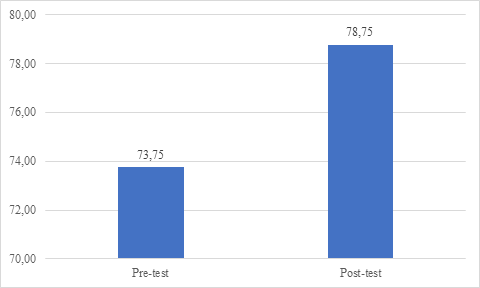
Figure 3: Average of global pre-test and post-test scores.
While the group average of the pre-test is 73.75/100, the final average reaches 78.75/100, which indicates an increase of 5 points. However, one of the participants obtained a lower score after the intervention and another obtained the same result in both applications of the exam. It is important to state that the impact of the intervention on the improvement of each specific language skill is the subject of a follow up quantitative research.
The initial quantitative assessment shown by the higher post-test scores is similar to the results reported by other researchers that used standardized tests of language skills. For example, Campbell and Fuentes-Luque (2020) report an average increase of 5.6 points in the post-test scores compared to the pre-test, using the TOEIC exam as a measurement instrument, after an English subtitling online course for Spanish speakers. Plaza-Lara and Fernández-Costales (2022) indicate that their participants obtained an average increase of 0.17 points, using the ITIS and FITIS exams as instruments, after an in-person English subtitling course for Spanish speakers.
CONCLUSION
The inclusion of audiovisual translation in the teaching of Italian as a foreign language through the described didactic sequences results in the creation of an environment conducive to motivating students, immersing them in the culture of the target language, as well as bringing to their learning experience the reality of digital multimodal discourses that surround their daily life. In this way, as Soler Pardo (2020) indicates, students will not work in the language in isolation, but as part of a larger whole: the audiovisual text and the technological context.
The methodological novelty of the proposal for the design of didactic sequences presented here, in comparison with previous research discussed in this paper, lies in the combination of four different types of subtitling that guide the pedagogical objectives towards the comprehensive improvement of language skills in Italian as a foreign language, while promoting mediation skills and digital skills. In addition, the finished assembly of the course is a contribution to the exploration of the didactic possibilities of translation in foreign language classrooms.
However, the proposal finds its limitations in the fact that the functioning of the interactive activities designed in h5p depends on the permanence and stability of the URL addresses of the chosen audiovisual materials. If the owners of the videos decide to remove the content from the YouTube platform, or if they make modifications that alter the URL, the material will stop working on h5p. This problem arose with the trailer Mio fratello rincorre i dinosauri, so the material had to be modified, updating the URL of the video.
The implementation and evaluation of the course in a pre-experimental research design has the limitation of having had few participants, however, it is important to note that participation was voluntary. Even so, the results obtained agree with those reported in the literature review and have implications for understanding the impact and relevance of translation tasks in the students’ motivation and engagement.
As Zimányi (2017) states, currently translating in language classes means reconsidering two misconceptions: 1) that translation is inappropriate as a didactic activity and 2) that translation is reduced to the transfer of text from one language to another. The first conception was rejected by the participants when expressing their satisfaction with the activities carried out and by the experts, when validating the contents and structure of the course. The content of the course is in tune with the proposals that have proven their effectiveness and impact on students. With respect to the second conception, it is demonstrated by working on four types of subtitles that translating goes beyond the transfer of content between two languages.
It is expected that the design and assessment of the activities presented in this article will have an impact on future research, so that the body of scientific evidence against misconceptions and limitations on the use of translation as a means of teaching is strengthened and consolidated.
REFERENCES
- Ávila-Cabrera, J. J. (2019). Reverse Subtitling in the ESP Class to Improve Written Skills in English. Journal of Audiovisual Translation, 4(1), 27-49. https://doi.org/10.47476/jat.v4i1.2021.22
- Ávila-Cabrera, J. J., & Rodríguez Arancón, P. (2021). The use of active subtitling activities for students of Tourism in order to improve their English writing production. Ibérica: Revista de la Asociación Europea de Lenguas para Fines Específicos, 155-180. http://www.aelfe.org/documents/41_07_IBERICA.pdf
- Beltramello, A. (2019). Exploring the Combination of Subtitling and Revoicing Tasks: A Proposal for Maximising Learning Opportunities in the Italian Language Classroom. International Journal of Language, Translation and Intercultural Communication, 93-109. https://doi.org/10.12681/ijltic.20279
- Campbell, A. P.; & Fuentes-Luque, A. (2020). Using subtitling to improve military ESP listening comprehension: an experimental study. Ibérica (40), 245-266. http://www.aelfe.org/documents/40_11_IBERICA.pdf
- Fernández Costales, A. (2021). Audiovisual translation in primary education. Students’perceptions of the didactic possibilities of subtitling and dubbing in foreign language learning. Meta, 66, 280-300. https://doi.org/10.7202/1083179ar
- Herrero, C.; Sánchez Requena, A.; & Escobar, M. (2017). Una propuesta triple: análisis fílmico, traducció audiovisual y enseñanza de lenguas extranjeras. InTRAlinea online translation journal. http://www.intralinea.org/specials/article/2245
- Incalcaterra McLoughlin, L.; & Lertola, J. (2015). Captioning and revoicing of clips in foreign language learning using Clipfair for teaching Italian in online learning environments. En C. Ramsey-Portolano, The future of Italian teaching: media, new technologies and multidisciplinary perspectives (págs. 55-69). Cambridge Scholars Publishing.
- Lertola, J. (2019). Audiovisual translation in the foreign language classroom. Applications in the teaching of English and other foreign languages. Voillans: Research-publishing. https://doi.org/10.14705/rpnet.2019.27.9782490057252
- Lopriore, L.; & Ceruti, M. A. (2015). Subtitling and language awareness: a way and ways. In Y. Gambier, A. Caimi, & C. Mariotti, Subtitles and language learning (págs. 293-321). Peter Lang.
- McKenzie, R. (2018). Subtitling in the classroom: Il secondo tragico Fantozzi. Neke The New Zealand Journal of Translation Studies, 1(1), 1-16. https://doi.org/10.26686/neke.v1i1.5160
- Plaza-Lara, C.; & Fernández-Costales, A. (2022). Enhancing communicative competence and translation skills through active subtitling: a model for pilot testing didactic Audiovisual Translation (AVT). Revista de lenguas para fines específicos, 28(2), 16-31. doi:https://doi.org/10.20420/rlfe.2022.549
- Ragni, V. (2018). Didactic subtitling in the Foreign Language classroom. Improving language skills through task-based practice and Form-Focused instruction: Background considerations. Translation and Translanguaging in Multilingual Contexts, 4(1), 9-29. https://doi.org/10.1075/ttmc.00002.rag
- Soler Pardo, B. (2020). Subtitling and dubbing as teaching resources for learning English as a foreign language using software. Lenguaje y textos(51), 41-56. https://doi.org/10.4995/lyt.2020.12690
- Talaván, N. (2011). A quasi-experimentl research on subtitling and foreign language acquisition. In L. Incalcaterra McLoughlin; M. Biscio; & M. A. Ní Mhainnín, Audiovisual translation: subtitles and subtitling theory and practice (págs. 197-217). Peter Lang.
- Talaván, N. (2019). La traducción audiovisual como recurso didáctico para mejorar la comprensión audiovisual en lengua extranjera. Doblele: revista de lengua y literatura, 85-97. https://doi.org/10.5565/rev/doblele.59
- Talaván, N.; Ibáñez, A.; & Bárcena, E. (2016). Exploring collaborative reverse subtitling for the enhancement of written production activities in English as a second language. ReCALL, 29(1), 39-58. https://doi.org/10.1017/S0958344016000197
- Talaván, N.; Lertola, J.; & Fernández-Costales, A. (2024). Educational bases of didactic AVT in FLE. In Fernández Costales, A. & Talaván, N. Didactic Audiovisual Translation and Foreign Language Education. Routledge.
- Torralba-Miralles, G. (2016). L'aprenentatge de llengües a través de la traducció audiovisual: la subtitulació com a eina per a l'adquisició de lèxic en llengua estrangera. Universitat Jaume I.
- Torralba-Miralles, G. (2020). El uso de subtítulos pasivos y activos en la enseñanza de lenguas extranjeras: una revisión de las posibilidades didácticas de ambos recursos. Íkala, Revista de Lenguaje y Cultura, 231-250. https://revistas.udea.edu.co/index.php/ikala/article/view/332147/20795644
- Zimányi, K. (2017). Gateways into teaching translation in the language classroom: a proposal for audiovisual translation of Coraline in EFL/ESOL. Araraquara, 3(2), 336-351. https://10.29051/rel.v3.n2.2017.9427
Informações do artigo
- DOI
- https://doi.org/10.14571/brajets.v17.n3.926-938
- Recebido
- 2023-08-09
- Aceito
- 2024-09-24
- Publicado
- 2024-09-24
- Direitos autorais
- Copyright (c) 2024 Olivia Correa Larios, Diana Margarita Córdova Esparza, Roberto Gerardo Flores Olague - CC BY Creative Commons Attribution 4.0 International License
- Licença
- Este é um artigo publicado em acesso aberto sob uma licença Creative Commons https://creativecommons.org/licenses/by/4.0/